

The Chairman of the Economic and Financial Crimes Commission, Ola Olukoyede, recently rejected calls for the creation of a single agency to manage all assets recovered by government agencies.
Olukoyede reintated that such an arrangement would be impractical given the volume and geographical spread of assets recovered by more than 20 statutory agencies across the country. The EFCC chairman stated this in a post on his X account on Tuesday while weighing in on the ongoing debate over the management of forfeited assets.
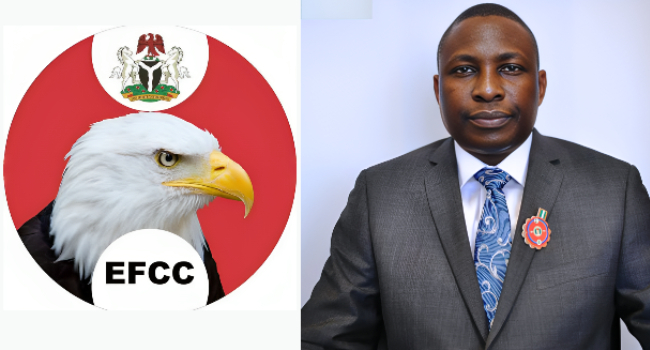
Olukoyede, who previously served as Secretary of the commission and was involved in asset management, said his position was based on practical experience. “I have followed the debate on managing forfeited assets closely. I am not a commentator on this — I am a practitioner. As Secretary of the EFCC, I managed assets for years,” he said.
He rejected proposals for a central agency to take over the management of all recovered assets, citing what he described as unsuccessful attempts in other countries. “Some are calling for a single agency to handle all recovered assets. It was tried in the UK at a cost of over £34 million and folded within a year. South Africa tried it too. Sixteen months. Look it up,” Olukoyede stated.
He also pointed to the scale of asset recovery across Nigeria, arguing that no single institution would be capable of effectively managing the volume of assets recovered by different agencies.
“Over 20 statutory agencies recover assets for government. The Police alone have divisions in nearly every local government and stations in most wards, all forfeiting assets. No single agency could manage the Police holdings alone, let alone everyone else’s,” he said.
Olukoyede also cited the Asset Management Corporation of Nigeria (AMCON), which he said was established to manage recovered assets, arguing that the government had lost more than N5 trillion through the arrangement.
The EFCC chairman said the Proceeds of Crime Act (POCA) provides a more appropriate framework by placing responsibility for recovered assets on the agencies that recover them.
“POCA got it right by placing the duty on each agency: what did you recover, and what have you done with it? That, alongside Section 31 of the EFCC Act, is the most effective model anywhere in the world,” he said.
Olukoyede said the EFCC publishes details of its recovered assets on its website within 24 hours and that its annual reports had been submitted to the National Assembly on time throughout his tenure.
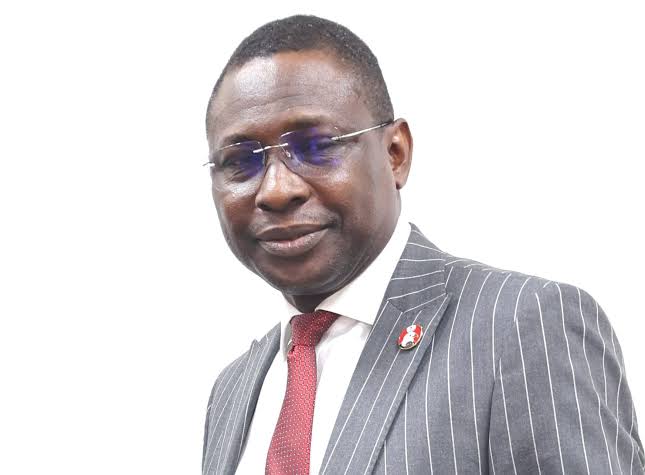
He added: “My pledge to Nigerians: not a pin nor a penny of recovered assets will be mismanaged under my watch.”
At a briefing in Abuja last week, Olukoyede disclosed that the EFCC had secured interim and final forfeiture orders covering 10,053 tangible assets since he assumed office. The assets include real estate, vehicles, plots of land, electronic items, schools, factories, hotels, oil rigs, barges, machinery and aircraft, as well as 102 tonnes of solid minerals.
He also disclosed that proceeds from the disposal of finally forfeited assets amounted to approximately N12.07 billion and had been paid to the Federal Government. According to the EFCC chairman, the commission recovered more than N1.23 trillion, $684.48 million, £373,905.78 and €9.34 million between October 2023 and June 2026.
He added that N661.32 billion and $492.37 million had been released to beneficiaries.
The management and disposal of recovered assets have remained subjects of public debate, particularly over transparency, accountability and the roles of agencies involved in the recovery process.
Earlier this year, Olukoyede also praised the Proceeds of Crime Act for streamlining the EFCC’s asset recovery and management processes, saying the law provided legal backing for the commission’s activities and helped reduce delays between forfeiture and disposal.
The debate has also included questions about the processes used to dispose of properties and other assets recovered as proceeds of crime.
Olukoyede maintained, however, that the focus should be on enforcing existing accountability mechanisms rather than creating another central institution to take over assets recovered by various government agencies.
He therefore challenged all agencies involved in asset recovery to account for what they recover and how the assets are subsequently managed.